


“`html
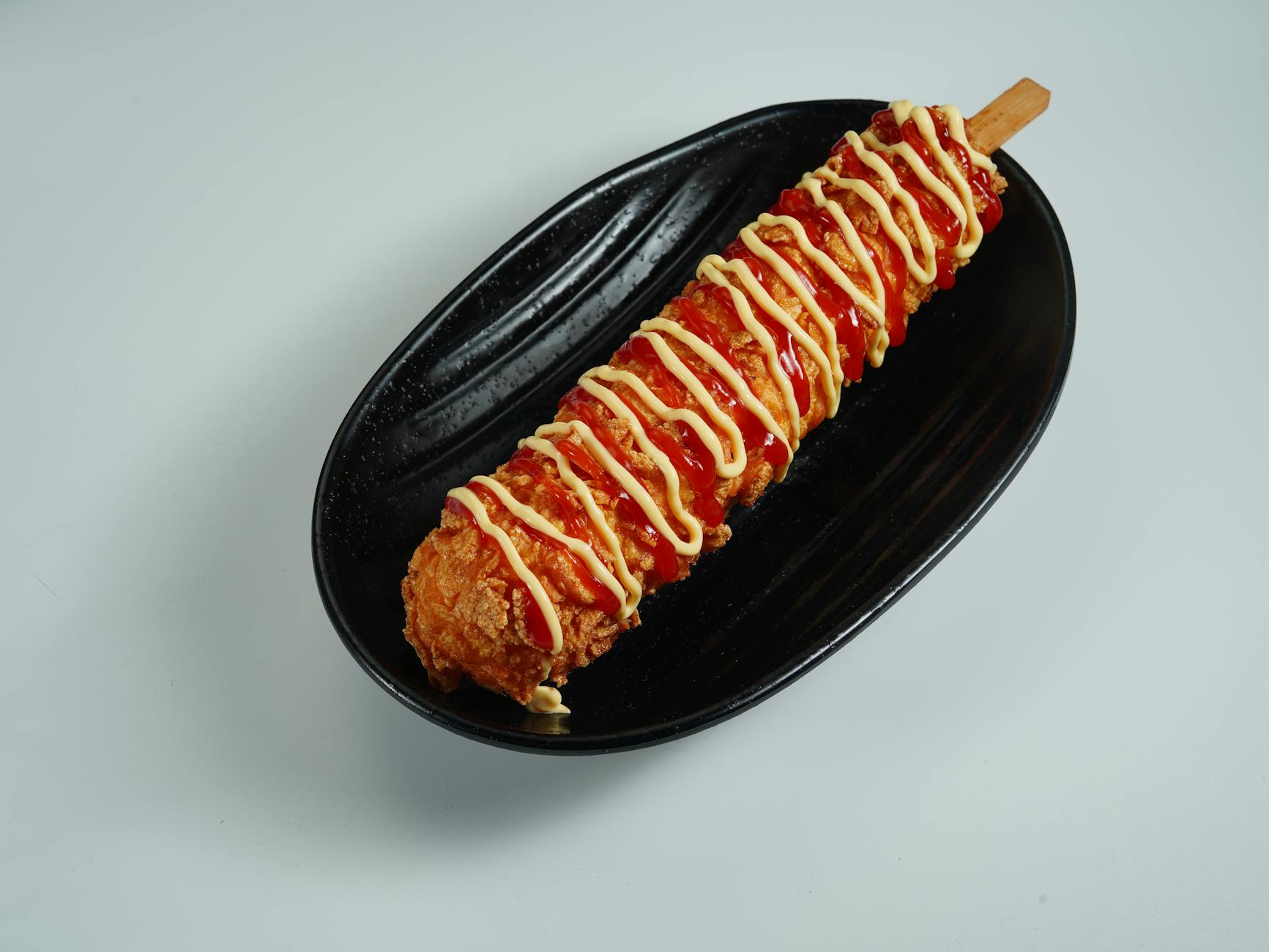
My fourth batch looked like a soggy tube sock. The batter slid off. The oil was wrong. Batch two had raw dough in the center. Batch three — don’t ask. But batch five, after three weeks and about $22 in ingredients? Shatteringly crispy outside, stretchy mozzarella pull in the middle, that weird-but-right sugar sprinkle on top. I made it with a Ziploc bag, a dinner fork, and a Dutch oven. No mold, no skewer rack, no deep fryer.
If you’ve been watching #KoreanCornDog videos — over 1.2 billion TikTok views as of 2025 — and assumed you need restaurant gear, you don’t. Here’s everything that actually works.
Korean Corn Dog vs. American Corn Dog: Why These Are Completely Different Foods
American corn dogs use a cornmeal batter — dense, crumbly, closer to cornbread. Korean corn dogs (also called gamja hotdog) use a yeasted flour batter that puffs up bread-like inside while the outside goes cracklingly crispy. Then — and this is the part that sounds wrong but is completely the point — you sprinkle white sugar on top right after frying.
The filling is different too. The standard build is a half hot dog, half mozzarella stick on one skewer. The cheese melts and stretches dramatically. That sweet-salty-savory hit is why South Korean convenience stores moved roughly 12 million of these in 2024, and why street stall lines in Seoul wrap around the block.
Yeasted Batter vs. No-Yeast Batter: One Is Clearly Better
I tested both over three weeks. The no-yeast version (baking powder only) is faster but produces a denser, fritter-like coating. If you have 60 extra minutes, go yeasted. It’s not even close.
Yeasted Batter — My Pick
- 1.75 cups all-purpose flour
- 1 cup warm water (105–110°F — warm on your wrist, not hot)
- 2 tsp active dry yeast
- 1.5 tbsp sugar
- 1 tsp salt
Mix the yeast and sugar into the warm water. Wait 5–10 minutes. If it doesn’t foam, your water was above 115°F (which kills yeast) or your yeast packet is expired — check the date, because that’s almost always the problem. Start over if it doesn’t foam. This step is non-negotiable.
Stir in the flour and salt until you get a thick, sticky batter. Cover with plastic wrap and let it rise 45–60 minutes at room temperature. You want it doubled in size with visible bubbles. In a cold kitchen (below 68°F), it can take up to 90 minutes.
Honest downside: This batter is stickier than you expect. Your hands will be coated. That’s not a problem — the stickiness is exactly what makes it grip the hot dog. Work with it, not against it.
Quick No-Yeast Batter — For When You’re Impatient
- 2 cups all-purpose flour
- 1 tbsp sugar
- 2 tsp baking powder
- 1 tsp salt
- ¾ cup milk or water
- 1 egg
Mix wet into dry, stir until smooth, use immediately. The result is decent — think thick fritter coating, not the chewy, pillowy exterior of the yeasted version. It works in a pinch, but it’s not the real thing.
Honest downside: You can taste the difference. Side by side, the no-yeast version feels flat. Save it for weeknights when you genuinely can’t wait an hour.
No Skewers? 4 Things Already in Your Kitchen That Work
Most recipes assume you have wooden chopsticks or long bamboo skewers. Here’s what I’ve used instead — all from my own kitchen drawers:
- Dinner fork: Stab the hot dog lengthwise. Holds well enough to dip and roll. Switch to tongs when frying — never hold a metal fork over hot oil. Downside: shorter handle than you’d like near a hot pot.
- Butter knife: Slide it through the center from end to end. More control than a fork, zero risk of puncturing the casing unevenly. Downside: harder to roll in coating.
- Metal reusable straw: Surprisingly excellent. Strong enough to hold a battered dog, and the width gives a solid grip. Downside: wash it immediately after — batter dries inside fast.
- No skewer at all (the chaos method): Wrap the hot dog around a mozzarella stick, freeze for 10 minutes until firm, then coat with your hands over a shallow dish. Your hands will be destroyed. The corn dog will be fine. Downside: coating is uneven and you will make a mess.
If you want actual wooden chopsticks, they’re around $3 at any Asian grocery or on Amazon and make every step easier. But you genuinely don’t need them.
The Ziploc Bag Trick That Saves the Whole Batch
Standard recipes tell you to dip the skewered hot dog into a tall, narrow cup of batter. Most people don’t own a cup that shape. Here’s the workaround I use every single time now:
- Pour your risen batter into a gallon-sized Ziploc bag.
- Push all the batter into one bottom corner.
- Lay the hot dog diagonally into that corner inside the bag.
- Press and roll it gently until fully coated.
- Snip a small corner off the bag and squeeze it out onto your panko tray.
Even coverage, no wasted batter, cleanup is throwing away one bag. If things get chaotic mid-fry, this saves you. A reusable piping bag works too, but the Ziploc costs nothing extra.
5 Coatings Under $3 Each — Taste-Tested and Ranked
This is where Korean corn dog vendors really differentiate themselves. I tested five budget coatings across my batches. Honest results:
- Crushed Shin Ramyun (~$1.20/pack): The winner. Irregular pieces fry up extra crispy, and there’s a ghost of spice and umami panko can’t touch. Crush the noodles inside the bag before opening. Downside: the seasoning packet is wasted — just use the noodles.
- Panko (~$3 for a large bag): The reliable default. Light, crunchy, neutral. Works with everything. Downside: the least interesting of the five by a wide margin.
- Hot Cheetos (~$2 for a small bag): Wild-looking, genuinely fun. Turns the exterior vivid orange. Bold cheese-and-chili flavor. Downside: overwhelms the filling. Not subtle at all — know what you’re signing up for.
- Crushed saltine crackers (~$1.50): Saltier than panko, slightly flatter crunch. Pairs well with the sugar sprinkle because of the salt contrast. Downside: doesn’t hold its crunch as long — eat within 10 minutes.
- Crushed potato chips (~$1.50): Texture is great — for about four minutes. Goes soft fast. Downside: only worth it if you’re eating immediately. Not batch-cook friendly.
Frying Without a Deep Fryer: The Exact Temperature You Need
Use at least 2 inches of neutral oil in a heavy-bottomed pot — vegetable, canola, or sunflower all work. I use a Dutch oven because it holds heat steadily. Avoid olive oil: wrong smoke point, wrong flavor.
Target temperature: 350°F (175°C). That’s the number. Below 350°F and the batter absorbs oil before it sets — you get a greasy, heavy coating. Above 375°F and the outside burns before the inside cooks through. A basic candy thermometer from Amazon runs $8–$12 and removes all the guesswork.
No thermometer? Drop a small piece of batter into the oil. It should sink slightly, rise to the surface, and bubble actively within 2–3 seconds. Sinks and sits there: too cold. Browns in under a minute: too hot.
Fry a maximum of 2 corn dogs at a time. Crowding drops the oil temp and gives you pale, greasy batter. Each takes 3–4 minutes — turn every 60 seconds for even color. Pull onto a wire rack, not paper towels. Paper towels trap steam and make the bottom go soggy. Sprinkle white sugar on immediately while hot.
Air Fryer vs. Deep Fry: What You Actually Gain and Lose
Yes, you can air fry these. No, it’s not the same result. Here’s exactly what you trade:
| Factor | Deep Fried (350°F oil) | Air Fried (375°F) |
|---|---|---|
| Exterior crunch | Shatteringly crispy | Crispy but less dramatic |
| Batter texture | Chewy, bread-like inside | Slightly drier |
| Cheese pull | Fully melted, stretchy | Fully melted — same result |
| Mess level | High (hot oil) | Low |
| Cook time | 3–4 minutes | 10–12 minutes |
For air fryer: spray the basket generously with oil, set to 375°F, cook 10–12 minutes, flip at the 6-minute mark. Good enough for a Tuesday night craving in a small apartment. Just don’t expect the same crunch — it’s a different animal.
Freeze a Big Batch: What Actually Works
Korean corn dogs freeze well — almost no home recipe mentions this, and it’s genuinely useful. Fry them first, let them cool completely, then wrap each one individually in foil and store in a freezer bag. They keep for up to 3 months.
To reheat: air fryer at 375°F for 6–8 minutes from frozen, or oven at 400°F for 12–15 minutes. Microwave reheating technically works but makes the coating soft and chewy — skip it if you care about texture. Never freeze un-fried battered corn dogs. The batter goes watery. Fry first, freeze after, always.
Every Problem I Had — and the Exact Fix
- Batter slides off: The hot dog is wet. Pat it completely dry with a paper towel before coating. Moisture is the enemy of adhesion.
- Batter too thin: Dough didn’t rise enough, or too much water. Add flour 2 tablespoons at a time until it holds shape on a spoon.
- Batter too thick to coat: Add warm water one tablespoon at a time. It should coat a spoon and hold without being stiff.
- Coating falls off in the oil: Batter was too thin, or you moved it too soon. Let the corn dog sit undisturbed for 45–60 seconds after going in before turning.
- Greasy result: Oil dropped below 350°F. Let it recover fully between batches — about 2 minutes. Never fry more than 2 at once.
- Dough didn’t rise: Water was above 115°F (killed the yeast) or the yeast is expired. Check the packet date. That’s almost always it.
Scaling the Recipe Up or Down
The base recipe makes about 6 corn dogs. Rise time stays the same regardless of batch size — just make sure your bowl is large enough, since the batter roughly doubles in volume.
- For 12: 3.5 cups flour, 2 cups warm water, 4 tsp yeast, 3 tbsp sugar, 2 tsp salt
- For 4: 1.25 cups flour, ⅔ cup warm water, 1.5 tsp yeast, 1 tbsp sugar, ¾ tsp salt
Related: I Burned 6 Batches Testing How to Make Korean Corn Dogs at Home Crispy — Here’s What Finally Worked
Related: How to Make Korean Corn Dogs at Home Crispy (6 Batches of Mistakes Taught Me This)
Related: 5 Korean Street Food Recipes I Make at Home (Costs $1.50–$8, Beats Every Delivery Order)
Related: I Tested Low-Sodium Kimchi for 30 Days — Here’s What Actually Changed (With 3 Recipes Under $12)
Related: I Tested Every Low-Sugar Gochujang I Could Find — Here’s What’s Actually Worth Buying
Related: I Tested 12 Korean Meal Kits With Flaxseed & Perilla Oil — Here’s What’s Actually Worth $14
Frequently Asked Questions
What’s the real difference between American and Korean corn dogs?
American corn dogs use cornmeal batter — dense, crumbly, closer to cornbread. Korean corn dogs use yeasted flour batter that’s softer, chewier, and slightly sweet. The panko or crushed-snack coating adds a second crunch layer that American versions don’t have. The mozzarella filling and post-fry sugar sprinkle are entirely Korean touches. Same name, completely different food.
Can I make these without any skewer or chopstick?
Yes. A dinner fork works for coating — just switch to tongs when frying. A butter knife or metal reusable straw both work too. The chaos method (freeze the filled hot dog until firm, coat with your hands) is messier but produces the same result. The skewer is a convenience tool, not a requirement.
Why does my batter keep sliding off?
Almost always moisture. Pat the hot dog completely dry with a paper towel before you do anything else. If batter still slides, it’s too thin — add flour a tablespoon at a time until it coats a spoon and holds shape. The Ziploc bag method also helps because you get more even pressure than a bowl dip.
What can I use instead of panko?
Crushed Shin Ramyun noodles are my first pick — extra crispy, slight spice, great texture for about $1.20 a pack. Hot Cheetos for color and bold flavor. Crushed saltines for a saltier bite. Regular breadcrumbs work but go soft faster. Potato chips are fine if you eat within 5 minutes. A half-panko, half-crushed ramen mix gives you structural crunch plus flavor — that’s my current go-to.
How long does the batter need to rise?
45–60 minutes at room temperature. In a cold kitchen (below 68°F), up to 90 minutes. It’s ready when it’s visibly puffed and bubbly. Don’t try to speed it up with hotter water — above 115°F kills the yeast and you’ll get a flat, dense coating. If you’re short on time, use the no-yeast baking powder version, but the texture difference is noticeable.
What’s the right oil temperature for frying?
350°F (175°C) exactly. Below that and the batter soaks up oil before it sets. Above 375°F and the outside burns before the inside is cooked through. A basic candy thermometer costs $8–$12 on Amazon and removes all the guesswork. No thermometer? Drop a small bit of batter in — it should rise and bubble actively within 2–3 seconds of hitting the oil.
Can I prep these ahead for a party?
Yes — fry them fully, cool completely, wrap individually in foil, and freeze for up to 3 months. Reheat in an air fryer at 375°F for 6–8 minutes or an oven at 400°F for 12–15 minutes. Avoid the microwave — it makes the coating rubbery. Don’t freeze them un-fried; the batter turns watery and won’t crisp up properly.