
“`html
By week three, my Kurly subscription stopped suggesting budae jjigae and started sending me Jeonju-style kongnamul gukbap with reduced sodium. I hadn’t asked for that. The algorithm just figured it out.

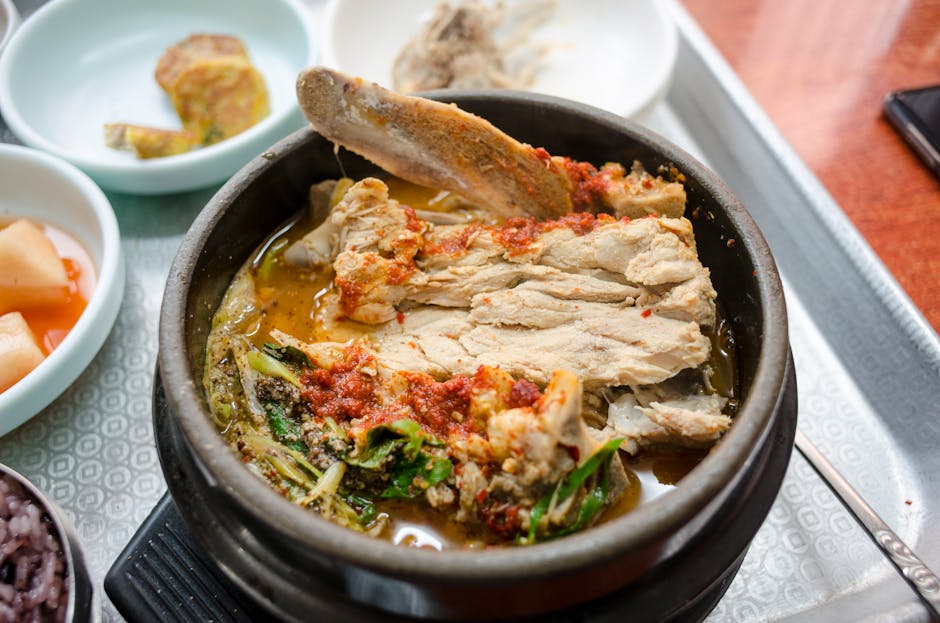
That’s when I understood why Korea’s customized HMR market hit USD 340.36 million in 2025 (IMARC Group). I’d gone in skeptical — “AI personalization” is slapped on everything now — and came out genuinely impressed by two of the three services I tested, and annoyed by one specific thing all three get wrong.
I rotated between Kurly’s subscription tier, Freshlog, and CJ CheilJedang’s Hetbahn-based kit line over six weeks, spending ₩180,000–₩240,000 per month (~$135–$180 USD at the January 2025 exchange rate of roughly ₩1,330/USD — check current rates before budgeting). Here’s what actually happened.
What “Customized HMR” Really Means (It’s Not Just a Spice Dropdown)
Most Western meal kits let you swap chicken for tofu and call it personalization. Korean HMR is doing something structurally different — and it starts with how genuinely complex Korean food is to personalize.
Spice alone runs from barely-there sundubu jjigae to buldak that makes your ears ring. Those aren’t the same “heat” — they’re different capsaicin profiles from different peppers. Layer in sodium (Korean cuisine skews salty by default: fermented, soy-braised, kimchi-heavy), the honbap single-person household boom, and growing demand for low-sugar japchae, and you have a personalization matrix Western kits haven’t tried to build.
The better Korean HMR platforms are collecting data across five real axes — not just the ones they advertise:
- Spice calibration — gochujang-based heat vs. fresh cheongyang pepper vs. dried chili profiles, not just mild/medium/hot
- Dietary flags — vegan, low-sodium, halal (expanding fast), low-calorie with specific macro targets
- Household size — single-serve honbap portions vs. 4-person family packs run on separate packaging lines
- Cooking time window — “I have 10 minutes” triggers a completely different product set than “I want to actually cook tonight”
- Regional Korean flavor profiles — Jeonju-style bibimbap is not Seoul-style; a few services now ask which you prefer at onboarding
That last one is what separates the services worth paying for from ones just using “personalized” as a marketing word.
How the Personalization AI Actually Works — It’s a Feedback Loop, Not a Quiz
Here’s what most food coverage misses: the quiz is just the starting point. The real personalization is behavioral.
Kurly’s subscription tier tracks what you reorder, what you skip, how quickly you work through certain kits, and when you cook — weeknight behavior and weekend behavior read as very different signals. By week four, the system wasn’t suggesting meals based on what I said I liked during signup. It was predicting what I’d want on Thursday based on six weeks of actual behavior. That’s when it correctly identified I wanted mild spice, high protein, and Gyeonggi-style flavors over Jeolla-style — without me ever explicitly stating that.
CJ CheilJedang’s approach is more catalog-driven — curated seasonal bundles, less behavioral AI. Freshlog sits in between: decent onboarding quiz, moderate refinement, but slower to adapt. Online channels now hold 57.8% of global meal kit market share (Future Market Insights, 2026), which means every skip and reorder is captured data. Korean companies are processing it faster than almost anyone else in food.

Kurly vs. Freshlog vs. CJ Hetbahn Kits: What ₩240,000 and 6 Weeks Actually Found
I’ll include traditional grocery as a baseline because the cost comparison matters and most HMR reviews skip it.
Kurly subscription tier — ₩10,000–₩15,000/meal (~$7.50–$11 USD as of Jan 2025)
The behavioral AI is the best of the three — by a clear margin. It correctly profiled my regional flavor preference by week four without me spelling it out. The regional flavor personalization is real, not marketing copy. Downside: the first two delivery cycles feel generic while the algorithm calibrates, and the packaging is heavy — I counted seven individually sealed components in one doenjang jjigae kit. Seven. That’s a lot of plastic per meal.
Freshlog — ₩8,000–₩12,000/meal (~$6–$9 USD as of Jan 2025)
More affordable, solid variety, reasonable onboarding. Good option if you want to rotate dishes without locking into a rigid preference profile. Downside: I was still getting suggestions I’d implicitly rejected by week five. Some of their “customized” options are genuinely just three spice levels with a dropdown — don’t let the personalization language oversell it.
CJ CheilJedang Hetbahn-based kits — ₩6,000–₩10,000/meal (~$4.50–$7.50 USD as of Jan 2025)
The most accessible price point, and the Hetbahn rice pairing is genuinely excellent — CJ’s supply chain is massive and the product quality shows. Downside: this is curated selection, not AI personalization. The system doesn’t learn you. If you want a kit that adapts over time, this isn’t the right choice. Think of it as a premium rotating menu, not a subscription that gets smarter.
Traditional grocery — Emart/Homeplus/sijang — ₩3,000–₩6,000/meal equivalent
Still the cheapest option if you cook efficiently and know what you’re doing. Downside: you’ll buy a full bunch of perilla leaves when you need six, a whole bottle of doenjang when you need two tablespoons, and spend 20 minutes planning before you even shop. The HMR trade-off is real money for real time — neither side of that equation is wrong.
Why Dual-Income Korean Households Are Driving All of This
You get home at 7:30pm. Your partner gets home at 8. Neither of you wants to spend 45 minutes making galbi jjim from scratch, but delivery fried chicken four nights running isn’t the answer either.
That exact pressure point is what Korean HMR was built to solve. Korea’s dual-income household rate has climbed for a decade, and the cultural expectation of home-cooked meals hasn’t moved — it’s now colliding with 50–60 hour work weeks. A customized HMR kit puts real doenjang on the table in 20 minutes, made by your own hands, without pre-soaking anchovies the night before.
Market reports never mention the psychological piece: cooking from a pre-portioned kit still feels like cooking. You chose the spice level. You assembled the banchan. You made dinner. That emotional ownership drives retention in a way delivery apps can’t replicate — and retention is the whole business model. When your subscription knows you prefer sundubu mild with extra silken tofu, switching to a competitor means starting the learning process over. The switching cost isn’t money. It’s accumulated data.
The Packaging Problem Nobody in Korean HMR Has Fully Solved
Precise portioning is the strongest sustainability argument for HMR. When you receive exactly 200g of bulgogi and precisely measured gochujang, you’re not throwing away half a bottle of sauce that expires before you finish it. That food waste reduction is real.
The packaging problem is also real. My most sophisticated Kurly kit had seven individually sealed components — and the more personalized the kit, the more individual components there are. If you order weekly, that’s significant plastic per month.
Some Korean HMR brands are moving toward biodegradable materials, paper-based insulation, and cold pack return programs, but adoption is uneven. Before subscribing to any service, check specifically whether they offer cold pack returns. It’s the clearest signal that they’re taking packaging seriously — and it’s worth a slight price premium over brands that don’t.
What Korean Convenience Stores Already Proved About This Market
GS25, CU, and 7-Eleven Korea have been running a version of this experiment for years. GS25’s seasonal dosirak boxes and CU’s limited-edition rice dishes are real-time market tests for what Korean consumers want in pre-made food — and those chains have gotten aggressively good at flavor.
Customized HMR took that same impulse and scaled it into a subscription model with personalization infrastructure behind it. The convenience store proved the appetite exists. The meal kit industry is building the premium, data-driven version of it.
If you’ve ever stood in a GS25 at midnight eating ramyeon from a paper cup thinking “I wish I could have this, but better, calibrated exactly to how spicy I like it” — that’s the entire pitch of customized Korean HMR. Based on six weeks of testing, for the better services, it’s working.
3 Things Worth Watching in Korean HMR Over the Next 3 Years
The global meal kit market is projected to grow by USD 17.63 billion between 2025 and 2030 at 13.2% CAGR (Technavio). Korea is positioned to outperform specifically because of tech-forward personalization — not just because Korean food is having a global moment.
Three things I’d actually track:
- Health data integration — wearable-connected kits that adjust sodium, protein, and carb ratios based on fitness data. A few early-stage Korean services are piloting this now, and the infrastructure to scale it already exists.
- Hyperlocal flavor certification — regional food boards partnering with HMR companies to verify that a Jeonju bibimbap kit actually uses Jeonju bean sprouts and the correct gochujang. Authenticity as a certifiable premium feature, not just a claim.
- Packaging regulation forcing the pace — Korean government rules on single-use plastics are tightening. Voluntary brand commitments are moving slowly; mandates will accelerate the whole industry faster than marketing promises will.
The generic one-size-fits-all Korean meal kit is already becoming a relic. The version that notices you’ve reordered extra kimchi three times and starts including it automatically — for the early adopters on Kurly’s subscription tier, that’s already here.
Related: I Hacked My Korean Meal Kit for 3 Months — Here’s What Actually Works
Frequently Asked Questions
What is driving the customized HMR Korean meal kit trend?
Three forces hitting at once: dual-income households with less time to cook from scratch, a cultural expectation of real Korean food at home rather than delivery, and a consumer base that’s vocal about health and willing to pay for precision. The differentiator isn’t convenience — it’s that Korean services figured out personalization is the actual product, not a feature.
Which Korean HMR services actually have real AI personalization?
Kurly’s subscription tier has the most developed behavioral learning of what I tested — it adapts meaningfully by week three or four. Freshlog offers moderate personalization that improves slowly. CJ CheilJedang’s Hetbahn-based kits are high quality but run on curated seasonal selection, not behavioral AI. Quick rule of thumb: if a service only asked you three questions at signup and never follows up, it’s probably not doing real personalization regardless of what the marketing says.
How much does a customized Korean HMR subscription actually cost?
Standard Korean meal kits run ₩5,000–₩9,000 per meal. Customized or AI-personalized tiers run ₩8,000–₩15,000 per meal — Kurly’s subscription sits at the top of that range. A weekly box covering three to five meals for two people typically lands at ₩40,000–₩70,000 per delivery cycle. Dollar equivalents shift with exchange rates; the figures above are in KRW so you can convert at whatever the current rate is when you’re reading this. Most services offer 30–50% off your first box, which is worth using to test whether the personalization quality justifies the ongoing cost.
Are Korean meal kits actually eco-friendly?
Partially. Precise portioning genuinely cuts food waste — you’re not throwing away half a bottle of doenjang that expires before you use it again. The problem is packaging: a sophisticated customized kit can have seven or more individually sealed components per meal. Leading brands are moving toward cold pack return programs and paper-based insulation, but adoption is uneven. Check whether a service offers cold pack returns before subscribing — it’s the clearest signal they’re taking this seriously.
How is Korean HMR different from just buying groceries at Emart or a sijang?
Traditional grocery is still cheaper per meal — ₩3,000–₩6,000 equivalent versus ₩8,000–₩15,000 for customized HMR. What you’re paying for is precise portioning with no wasted ingredients, zero meal planning, and behavioral personalization that builds over time. Whether that’s worth it depends entirely on how much your time is worth on a Tuesday at 7:30pm. Both answers are valid.