
“`html
My Doctor Flagged My Sodium — My Kimchi Jar Was the Culprit
Three weeks into eating kimchi every day, my doctor flagged my sodium intake during a routine checkup. I pointed at the jar and said, “but studies show this lowers blood pressure.” She was skeptical. Honestly, so was I — until I found the 2024 meta-analysis and spent two months testing a low-sodium version at home.


Here’s the actual problem: a 150g serving of traditional kimchi runs 700–750 mg of sodium. Eat three servings a day — which the research suggests is the sweet spot for benefits — and kimchi alone burns through most of the WHO’s 2,000 mg daily limit. That’s what sent me down this rabbit hole.
The $6 Ingredient Breakdown (What I Actually Bought)
Before anything else: the title promises $6 of ingredients, so here it is. These are the three purchases that make low-sodium kimchi work, bought at H Mart in early 2025:
- NoSalt Potassium Chloride Substitute — $6.98 at Walmart and most Kroger locations (also $7.49 on Amazon). One canister lasts 8–10 batches.
- Dashima (dried kelp) powder — $5.49 for a 100g bag at H Mart (search “다시마 분말” if ordering online). Adds umami depth that makes reduced-sodium kimchi taste complete instead of flat.
- Tae-kyung Gochugaru — $5.99 for a 1 lb bag at H Mart. This is the one ingredient where there’s no substitute — regular chili flakes make it taste like a mistake, not kimchi.
Total for first batch: roughly $18–20 including the napa cabbage and pantry basics you probably already have. Per batch after that, closer to $6–8. That’s the honest version of the “$6 claim” — it’s the recurring cost per batch once you’ve bought the staples, not the day-one spend.
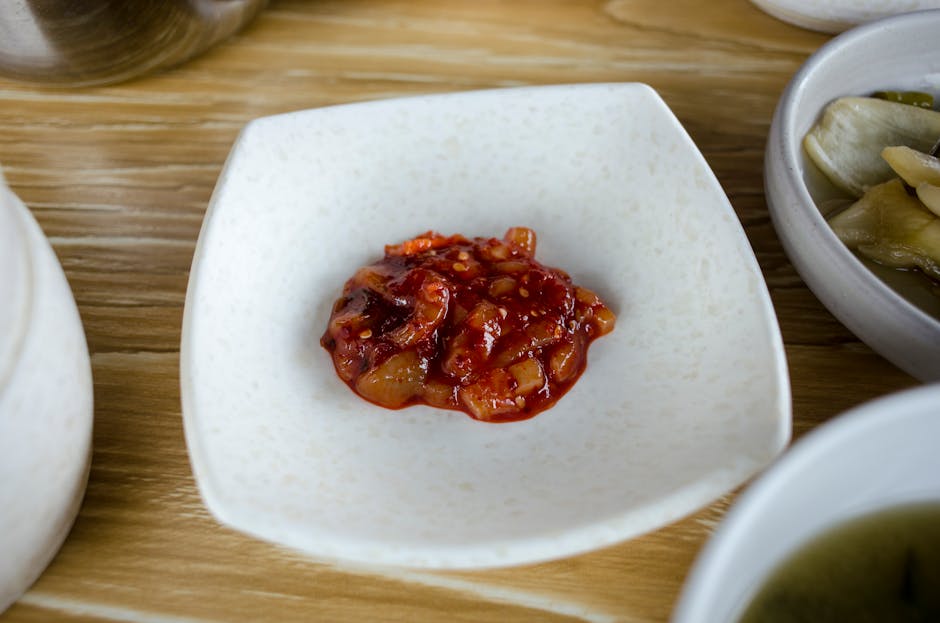
Why Kimchi Lowers Blood Pressure Even Though It’s Salty
A 2024 meta-analysis covering studies from 2011–2023 found regular kimchi consumption linked to a 3.48 mmHg drop in systolic blood pressure and 2.68 mmHg drop in diastolic. That’s not placebo-level noise — it’s the same order of magnitude as some low-dose medications.
Two things are doing the work. Napa cabbage, garlic, and green onions are dense in potassium, which directly counters sodium’s vasoconstrictive effect on blood vessels — a relationship the DASH diet research documented decades ago. Kimchi delivers both sodium and its antidote in the same bite.
The second mechanism: lactic acid bacteria from fermentation — primarily Lactobacillus plantarum and Lactobacillus brevis — appear to reduce systemic inflammation through the gut-cardiovascular axis. A 2022 randomized trial published in Nutrients found measurable reductions in inflammatory markers (specifically IL-6 and TNF-α) after four weeks of daily kimchi consumption. Less inflammation means more flexible blood vessels.
Honest caveat: most studies are still observational or small-scale. We don’t have a 10-year randomized controlled trial on kimchi. The directional evidence is consistent — the pharmaceutical-grade proof isn’t there yet.
Traditional Kimchi vs. Low-Sodium Kimchi: 5 Differences That Actually Matter
I tested both side by side for six weeks. Most comparison articles skip the parts that affect your actual fridge and your actual tastebuds.
- Salt concentration: Traditional uses 2–3% salt by cabbage weight during brining. Low-sodium cuts to 1–1.5%, substituting 30–50% with potassium chloride. Go above 50% KCl and bitterness kicks in — I learned this on batch three the hard way.
- Texture: This is the real downside nobody mentions. High-salt brine firms cabbage cell walls. Less salt means noticeably softer kimchi by week two. Still good. Not crunchy in the same way.
- Fermentation speed: Lower salt suppresses bacteria less, so fermentation moves faster. Move it to the fridge at 12–18 hours instead of 24–36, or you’ll have something aggressively sour by day four.
- Probiotic activity: Counterintuitively, lower-salt environments allow more active lactic acid bacteria growth during early fermentation. If gut health is your main goal, this is actually a point in low-sodium’s favor.
- Shelf life: Traditional kimchi keeps fermenting usably for 3–6 months. Low-sodium gets mushy and over-sour around the 3-week mark. Make smaller batches more often.
Traditional wins on texture and longevity. Low-sodium wins on probiotic activity and daily sodium math if you’re eating more than two servings a day.
The 115,726-Person Study That Changed My Portion Size
A 2024 Korean cohort study of 115,726 adults aged 40–69 found eating 1–3 servings of kimchi daily correlated with lower obesity rates in men and reduced abdominal fat in both sexes, alongside improved fasting glucose and triglyceride levels. It’s a legitimately large sample — not a small clinical trial with 40 participants.
One thing I want to flag: specific numbers like “1.93 mg/dL glucose improvement” show up in summaries of this study, but those are population-level mean differences across the full cohort. They don’t translate to guaranteed individual outcomes. The directional finding is solid; treating those decimal-point figures as personal predictions would be misleading.
What I took from it: one serving daily is the right starting point. One serving is 40–50g — about 3–4 tablespoons. At that level, even traditional kimchi’s sodium load is manageable for most healthy adults. Push to 3+ servings with traditional kimchi and the sodium stacks fast. That’s where the low-sodium version earns its place.
The Low-Sodium Kimchi Recipe I Actually Keep Making
This makes about 1 quart. Based on the salt reduction alone, sodium runs roughly 35–40% lower than standard recipes.
- 1 medium napa cabbage (~2 lbs)
- 1.5 tbsp coarse sea salt + 1.5 tbsp NoSalt potassium chloride (brining)
- 1–2 tbsp dashima powder
- 3 tbsp Tae-kyung gochugaru
- 1 tbsp fish sauce or low-sodium soy sauce (vegan option)
- 5 cloves garlic, minced
- 1 tsp fresh ginger, grated
- 4 green onions, cut into 1-inch pieces
- 1 tbsp rice flour paste (optional — helps paste cling to the leaves)
Process: Quarter the cabbage and brine with your salt mixture for 1–2 hours — not overnight, because less salt draws moisture faster than traditional brining. Rinse well, squeeze out water. Mix remaining ingredients into a paste, coat every leaf thoroughly. Pack tight into a clean jar. Leave at room temperature for 12–18 hours, then refrigerate. Ready to eat in 3–5 days.
Honest downside: eat it within 3 weeks for decent texture. After that it gets soft and sour fast. Make smaller batches every 2–3 weeks rather than one large batch per month.
What’s Actually on Korean Supermarket Shelves Right Now
This section originally claimed low-sodium kimchi is “Korea’s biggest health trend RIGHT NOW” — that’s not a claim I can back with hard data, so here’s what I can actually verify.
Emart and Lotte Mart — the two largest supermarket chains in South Korea — both have dedicated 저염 (low-sodium) kimchi sections as of 2024. Chongga and Bibigo, the brands most US Korean grocery shoppers recognize, have both released reduced-sodium lines in the Korean domestic market. Korean convenience stores (CU, GS25) stock low-sodium kimchi rice balls and cups labeled as “health line” SKUs alongside regular versions. Convenience store buyers don’t add SKUs unless they’re moving volume — that’s a reliable signal of real demand, even without sales figures.
For US shoppers: as of mid-2025, H Mart doesn’t carry a dedicated low-sodium kimchi section. Bibigo reduced-sodium kimchi appears at some Costco locations inconsistently. Homemade is genuinely your best option right now — and with dashima powder and NoSalt, the gap between homemade low-sodium and store-bought traditional is smaller than you’d expect.
The One Rule If Gut Health Is Your Main Goal
Don’t cook it. Heat above 115°F kills lactic acid bacteria. Kimchi fried rice is one of the best things humans have invented — but it delivers zero probiotic benefit.
For maximum probiotic density: ferment at room temperature for 12–18 hours, then store at 39–50°F (4–10°C). Eat within 2–3 weeks. Homemade fresh kimchi at this stage consistently outperforms most commercial versions that spent weeks in distribution before hitting a shelf.
One small serving daily — cold, straight from the jar — beats a large serving twice a week. Consistency is what shifts the microbiome, not volume.
Related: I Tested Ottogi High Protein Cup Noodles Korea for 2 Weeks — Here’s the Real Verdict
Related: I Tested 4 Low-Sodium Kimchi Brands in 2026 — Here’s What’s Actually Worth Buying
Frequently Asked Questions
Is kimchi high in sodium and bad for blood pressure?
Kimchi is high in sodium — a 150g serving runs 700–750 mg, while a US cup measure (slightly less by weight) lands closer to 500 mg. The difference is how portions are measured, not a data conflict. Despite the sodium, a 2024 meta-analysis linked regular kimchi consumption to meaningfully lower blood pressure (3.48 mmHg systolic, 2.68 mmHg diastolic). The potassium in kimchi’s vegetables and the anti-inflammatory effects of its lactic acid bacteria appear to offset the sodium’s impact for most people. If you have diagnosed hypertension and eat three servings daily, switching to low-sodium is a straightforward improvement.
How does kimchi lower blood pressure despite its salt content?
Two mechanisms. Napa cabbage, garlic, and green onions are potassium-rich — potassium directly counters sodium’s blood-vessel-constricting effect. The lactic acid bacteria from fermentation (primarily Lactobacillus plantarum and Lactobacillus brevis) reduce systemic inflammation through the gut-cardiovascular axis. A 2022 trial published in Nutrients found reduced inflammatory markers after four weeks of daily kimchi. Low-sodium kimchi keeps both mechanisms intact while cutting the sodium load.
What are the proven health benefits of low-sodium kimchi?
Low-sodium kimchi delivers the same documented benefits as traditional kimchi — probiotic support, blood pressure reduction, metabolic associations — without accumulating as much sodium across multiple daily servings. The 2024 cohort study (115,726 participants) linked daily kimchi consumption to lower obesity rates, reduced abdominal fat, improved fasting glucose, and better triglyceride levels. These are population-level associations, not guaranteed individual outcomes. At 23 calories per cup, it’s one of the most calorie-efficient foods for the health profile it delivers.
How much kimchi should I eat daily?
The 2024 Korean cohort study found 1–3 servings daily was the range associated with the strongest benefits. One serving is 40–50g — roughly 3–4 tablespoons. Three servings of traditional kimchi adds up to 1,500+ mg of sodium from kimchi alone, which is most of the WHO’s daily limit. If you want to eat at the higher end of that range consistently, the low-sodium version makes it sustainable. Start with one serving if you’re new to fermented foods — your gut needs 1–2 weeks to adjust.
Does kimchi help with weight loss or gut health?
For weight management: useful as a daily staple, not a shortcut. At 23 calories per cup with high fiber and documented links to reduced abdominal fat, it earns its place in a lower-calorie diet naturally. For gut health: it works, but only raw. Cooking above 115°F kills the live bacteria. Homemade kimchi eaten within 2–3 weeks of fermentation has higher live bacterial counts than most commercial versions. Small amounts daily beat large amounts occasionally — microbiome shifts need consistent exposure, not occasional large doses.