

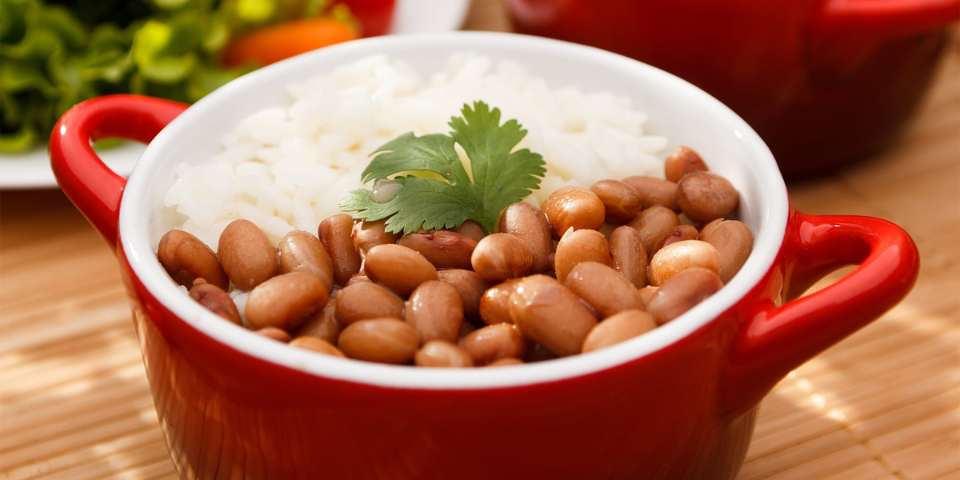

Among the dietary challenges of vegetarians and vegans, maybe none receives extra consideration than the everlasting seek for adequate protein. For these on a plant-based food plan, it may be onerous sufficient to compete with the sheer density of protein offered by meat and dairy merchandise, however throw within the want to mix complementary proteins and it might appear almost inconceivable.
If you’re new to the idea of incomplete proteins, learn on. Below we’ll focus on what they’re, how they differ, and which to mix so as to make them full.
What Are Complementary Proteins?
Protein pairing is the observe of mixing plant-based meals which are lacking or are low in a number of particular amino acids — that are the constructing blocks of protein — so as to spherical out your general protein consumption. There are 20 totally different amino acids, however solely 9 are deemed important. That means your physique can’t produce them, in order that they should be derived from meals.
Foods with all 9 important amino acids (EAAs) rating excessive in organic worth and are deemed “full proteins.” While all animal proteins are full proteins, few plant meals meet that criterion. But you may nonetheless get all of your EAAs from plant-based meals by combining them. That’s complementation… complementarity… complementiasis — no matter you name it!
You can consider amino acids like beads on a protein necklace: By stringing totally different numbers and forms of beads, your physique can create infinite potentialities of tissues, hormones, and so forth. It’s to your profit to have as many beads mendacity round simply in case you want them.
Complete vs. Incomplete Plant Proteins
You can rely the variety of full plant proteins on one finger: At current, soy is the one confirmed plant-based protein that’s full, regardless of frequent knowledge to the opposite. That makes it a great protein supply for vegans and explains its ubiquity as a meat substitute.
But you can get your whole EAAs from plant sources — it merely requires some dietary steadiness. Beans (besides soy), grains, nuts, seeds, and greens are incomplete protein sources since they’re lacking or don’t include sufficient of a number of EAA. But collectively they’ll type full protein profiles.
The useful chart beneath explains which amino acids are lacking from which plant meals and what to pair it with to get all 9 EAAs. Rice and beans, for example, is a basic instance of protein complementation.
| Food | Missing Amino Acid | Complementary Protein Source |
| Beans | Methionine | Grains, nuts, seeds |
| Grains | Lysine, Threonine | Legumes |
| Nuts & seeds | Lysine | Legumes |
| Vegetables | Methionine | Grains, nuts, seeds |
| Corn | Tryptophan, Lysine | Legumes |
Should You Eat Complementary Proteins on the Same Time?
Simultaneous protein complementation was advocated prior to now, however it’s now usually believed you can get away with consuming them throughout the similar day or so. “Vegetarians and vegans don’t want to fear about complementing meals at each meal. Just shoot for a well-balanced food plan,” Maguire advises.
How to Combine Complementary Proteins
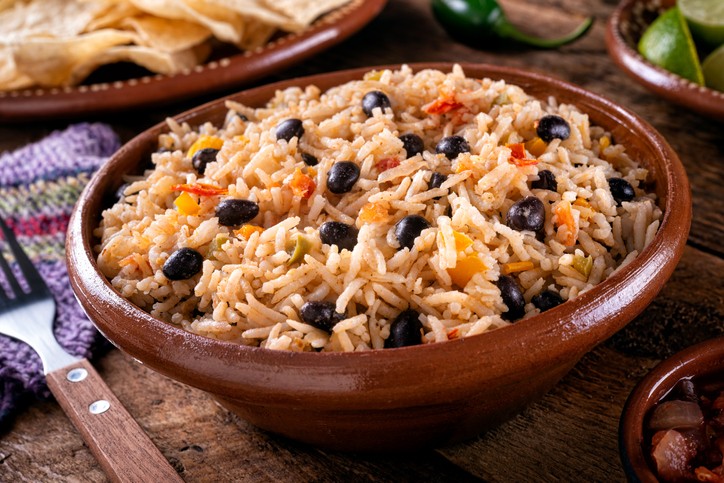
Even after studying this, the bean counters (see what we did there?) amongst us should still need to pair complementary proteins anyway. If it makes your protein accounting efforts any less complicated, complementary protein pairings seem naturally in lots of conventional cuisines:
- Beans and rice
- Peanut butter and wheat bread
- Hummus and pita
- Tortilla chips and bean dip
- Oatmeal and almonds
- Barley with lentil soup
Clearly, there are many scrumptious complementary protein pairings. Here are three guidelines of thumb for many who are contemplating protein complementation:
1. Choose high-protein meals
If you’re following a calorie-restricted food plan, it’s a good concept to select extra protein-dense plant-based meals — nuts, seeds, beans, tofu, and so forth. — to make sure you meet your day by day wants with out blowing your calorie price range. (You ought to nonetheless eat avocado, mushrooms, oatmeal, spinach, broccoli, and kale; all of them include protein, simply not a lot.)
You’re additionally getting fiber with out loading up on energy. Win-win.
2. Eat a number of plant-based proteins
The extra assorted your food plan, the much less necessary protein complementation turns into. With a tight price range, selection could be a wrestle. In that case, pair a few high-protein meals whose amino acid profiles complement one another (see chart above).
3. Load up on full proteins
Eggs, Greek yogurt, cottage cheese, and low-fat milk can increase protein consumption for some vegetarians. Clearly they gained’t work for vegans, who can as a substitute make the most of natural soy-based meals like tempeh, tofu, and edamame.
Why It’s Harder for Vegetarians and Vegans to Get Enough Protein
A high-protein food plan is prized amongst extremely lively folks as a result of protein enhances restoration and promotes efficiency. Consuming protein after train additionally helps stimulate muscle development and construct energy. And if you happen to minimize energy for weight reduction, a high-protein snack might help stave off starvation and protect muscle mass at the same time as you shed kilos.
Unsurprisingly, vegetarians and vegans eat much less protein than omnivores. And as a group, athletic people want extra protein than the inhabitants at giant. “It’s frequent to suggest that vegan and vegetarian athletes eat 10 % extra protein than non-vegetarian athletes,” says Krista Maguire, RD, senior vitamin supervisor at BODi.
That’s as a result of plant proteins usually rating decrease in digestibility than their animal counterparts. Therefore, vegetarians and vegans should make sensible protein selections to get sufficient vitamins to attain their dietary and health targets.