
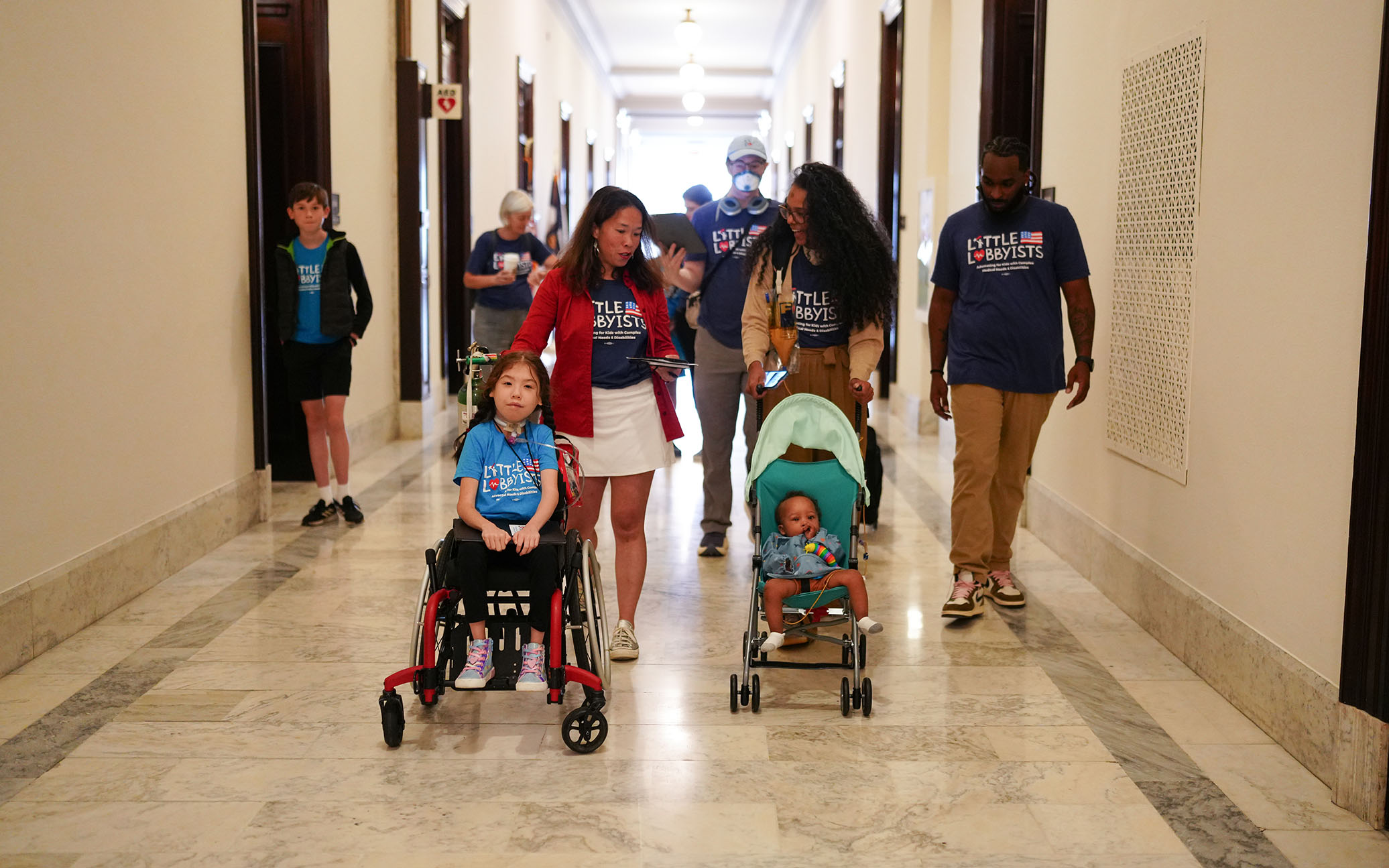
Just weeks after the U.S. House of Representatives accredited billions in cuts to Medicaid, the Senate is contemplating chopping this system much more, a transfer that advocates say would have dire penalties for individuals with disabilities.
Senate Republicans unveiled laws final week detailing sweeping modifications to Medicaid which are a part of a broader effort to make good on President Donald Trump’s home agenda. The measure contains extra aggressive modifications than the model handed by the House in May.
Both chambers are in search of to impose work necessities on many Medicaid beneficiaries and mandate that states test people’ eligibility for this system extra often, amongst different modifications, however a few of the Senate’s necessities could be extra stringent.
Advertisement – Continue Reading Below
Notably, the Senate can also be in search of to restrict Medicaid supplier taxes, a workaround that states use to gather extra federal {dollars} for this system.
“The Senate took a rotten invoice and made it worse,” stated Elena Hung, co-founder and government director of Little Lobbyists, a nationwide group advocating for youths with disabilities. “The Senate textual content cuts much more cash from Medicaid and can lead to much more hurt to medically complicated and disabled kids.”
While neither invoice explicitly requires spending on incapacity companies to be slashed, advocates say that decreasing federal funding in Medicaid will put monetary stress on states resulting in cuts in non-compulsory packages like house and community-based companies.
“History reveals that when Medicaid budgets are lower, house and community-based companies are among the many first companies lower,” stated Hung, whose group introduced households from throughout the nation to Capitol Hill final week to stress senators to reject Medicaid cuts. “Millions of Americans, together with disabled and medically complicated kids, are in imminent hazard of dropping Medicaid. The risk is dire.”
The newest proposal comes after greater than 1,100 organizations from throughout the nation led by the Disability and Aging Collaborative and the Consortium for Constituents with Disabilities despatched a letter to Senate leaders decrying the potential Medicaid cuts as “harmful and life-threatening.”
“As we’ve repeatedly emphasised, there isn’t any option to carve out individuals with disabilities and older adults from the hurt of those cuts,” the advocates wrote.
The overwhelming majority of non-compulsory Medicaid spending — 86% — goes towards companies and helps for individuals with disabilities and older adults, with house and community-based companies accounting for greater than half, the letter signifies. When federal Medicaid funding was decreased between 2010 and 2012, each state lower house and community-based companies in some style, the advocates stated, and ready lists “drastically elevated.”
Republican lawmakers insist that their proposal would obtain financial savings and prolong tax cuts instituted throughout Trump’s first time period whereas making certain that Medicaid serves these it’s meant for.
The invoice targets “waste, fraud and abuse in spending packages whereas preserving and defending them for essentially the most weak,” stated Sen. Mike Crapo, R-Idaho, who chairs the Senate Finance Committee.
Nicole Jorwic, chief program officer at Caring Across Generations, a company advocating for caregivers and individuals who depend on them, rejected that characterization and stated the Senate proposal took her and different advocates unexpectedly.
“This is a major risk as a result of we weren’t anticipating the Senate to really make the Medicaid cuts deeper,” she stated. “These cuts could be historic and would have an outsized impression on companies for individuals with disabilities. This invoice does nothing to alter that house and community-based companies are non-compulsory underneath the legislation, so when cuts come to the state degree, the primary place they may lower is non-compulsory companies, ready lists will develop, suppliers will shut and the DSP scarcity will worsen. We know at the least 2.6 million HCBS jobs could be in danger.”
“We should take motion and inform the Senate to tug out Medicaid cuts,” Jorwic stated.