
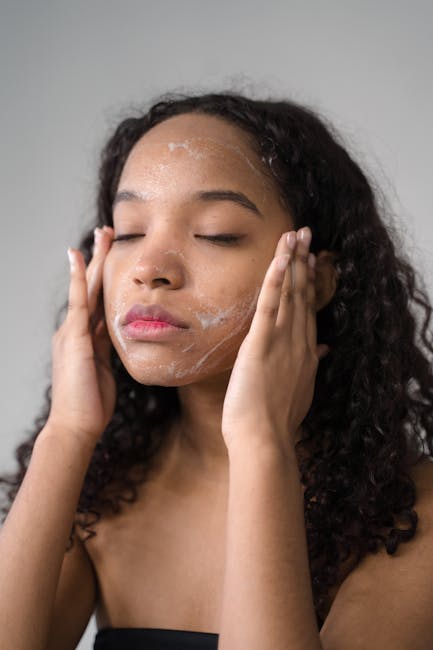
Korean Glass Skin Routine for Beginners (30-Day Plan)
You’ve seen the TikToks. Flawless, light-reflecting skin that looks like it’s been dipped in water. And you’ve probably clicked on a YouTube tutorial, gotten overwhelmed by 10 steps and ₩500,000 worth of serums, and quietly closed the tab.
Here’s the thing — real Korean glass skin isn’t that complicated, and it’s definitely not that expensive. I’ve been shopping at Olive Young every weekend and lurking on Korean skincare communities for years, and the gap between what goes viral and what Koreans actually do is wild. This article bridges that gap, gives you a real beginner routine with actual prices, and hands you a 30-day tracker so you can see the results yourself.
No overwhelm. No flexing. Just skin that actually glows.
What Actually Is Glass Skin? (The Korean Definition vs. What You’ve Seen on TikTok)
Glass skin — 유리 피부 (yuri pibu) — literally means “glass skin” in Korean. The term was popularized around 2017 by Korean makeup artist Ellie Choi, who used it to describe skin so clear, smooth, and hydrated it looks almost translucent. Like a pane of glass, not a disco ball.
But here’s where TikTok muddies things: a huge chunk of “glass skin” content you’ll see online is actually glass skin makeup — cushion foundations, dewy setting sprays, highlighter on the cheekbones. That’s a completely different topic (and a fun one — we cover it separately in our cushion foundation guide). What we’re talking about here is the skincare that creates that base, the kind where you look glowing even before you put anything on.
The Korean beauty community is firm on this distinction. Glass skin is a skin health goal, not a makeup technique. It requires consistency, the right products, and — honestly — some patience.
Even Korean actresses you see in dramas aren’t walking around with naturally perfect skin 24/7. Good lighting, professional makeup, and years of dedicated skincare routines all play a role. Korean beauty culture is refreshingly honest about this, and it’s worth keeping that context in your head from the start.
Now, about that YouTube tutorial. A video by creator kelly. on an affordable Korean glass skin routine for beginners hit 816,000 views in just five months in 2025 — which tells you everything about how hungry people are for this information. Kelly does a solid job covering the basics and keeping things budget-friendly, which is genuinely helpful.
But when you cross-reference her recommendations with Korean skincare community boards on Naver Café (Korea’s version of Reddit for skincare obsessives), a few things come up. Korean insiders point out that some steps she emphasizes — like heavy layering with multiple sheet masks daily — are more social-media-friendly than skin-friendly. Her recommended ₩45,000 (around $34) essence is also frequently flagged on 화해 (Hwahae), Korea’s biggest skincare review app, as “과대광고” (overhyped) — while a ₩12,000 ($9) COSRX alternative sitting right next to it on the Olive Young shelf carries a 97% recommendation rate from over 40,000 Hwahae reviews. The point isn’t that viral is wrong. It’s that price and hype rarely track with results.
One person who did get it right early? Makeup artist Pony (박혜민), whose “no-makeup makeup” tutorials from 2016 to 2018 are widely credited in Korean beauty media with bringing glass skin mainstream. Pony was always clear that the look starts with skincare prep, not product layering on top of rough skin. That foundational idea is what this entire routine is built on.
How to Build a Korean Glass Skin Routine for Beginners: The 5 Steps That Actually Matter
The classic Korean routine is 10 steps. You’ve seen the lists. They’re overwhelming and, honestly, unnecessary when you’re starting out. The logic behind those 10 steps is about absorption layering — Koreans call it 수분 레이어링 (sumun layering), or moisture layering — where each product creates a more receptive surface for the next.
You don’t need all 10 layers to benefit from that principle. You need the right five.
Morning Routine
-
Step 1 — Low-pH Gel Cleanser: In the morning, your skin just needs a gentle refresh, not a deep clean. A low-pH cleanser (around pH 5–6) keeps your skin’s acid mantle intact. Skip this and your moisturizer won’t absorb properly — skin barrier research suggests that pH-balanced cleansing improves subsequent product absorption compared to alkaline soaps that disrupt the skin barrier.
Try: COSRX Low pH Good Morning Gel Cleanser — ₩9,500 (approx. $7) at Olive Young. Hwahae rating: 96% recommendation from 62,000+ reviews.
-
Step 2 — Hydrating Toner (Tapping Method): Korean toners are nothing like Western astringents (more on that in the FAQ). Pat — don’t wipe — a hydrating toner into slightly damp skin using your palms. This is the first moisture layer and it prepares skin to absorb everything that follows. Oily skin: look for lightweight, watery formulas. Dry skin: go for richer “first essence” textures.
Try: Pyunkang Yul Essence Toner — ₩16,000 (approx. $12) at Olive Young. Hwahae rating: 98% recommendation. One of the most-searched toners on Naver in 2024.
-
Step 3 — Essence: This is the heart of the glass skin routine. A good essence delivers concentrated hydration and fermented actives deep into skin. Apply a few drops, press your palms together to warm it slightly, then pat onto skin. Korean beauty insiders recommend waiting 15–20 seconds after applying before moving to the next step — not 15–20 minutes, despite what some tutorials say. That’s a common myth.
Try: COSRX Advanced Snail 96 Mucin Power Essence — ₩18,000 (approx. $13) at Olive Young. Hwahae rating: 97% recommendation from 40,000+ reviews. A consistent top-seller since 2018.
-
Step 4 — Lightweight Moisturizer: Lock in everything you’ve layered. For daytime, you want something that sits comfortably under sunscreen without pilling. Gel-cream textures work for most skin types. If your skin is very dry, go for a richer cream — but still keep it breathable.
Try: Belif The True Cream Aqua Bomb — ₩38,000 (approx. $28) at Olive Young. Or budget option: ISNTREE Hyaluronic Acid Watery Sun Gel (doubles as SPF prep) — ₩22,000 (approx. $16).
-
Step 5 — SPF 50+ Sunscreen: Non-negotiable. UV exposure is the single biggest driver of uneven skin tone, texture loss, and collagen breakdown — all the things glass skin works against. Korean sunscreens are genuinely in a different class: lightweight, non-whitecasting, and designed to be worn daily, not just at the beach.
Try: Beauty of Joseon Relief Sun: Rice + Probiotics — ₩15,000 (approx. $11) at Olive Young. Hwahae rating: 98% recommendation. The most-reviewed sunscreen on Hwahae as of 2024. Absolutely no white cast.
Night Routine
Your evening routine follows the same five-step structure, with two swaps: double cleansing replaces the morning gel wash, and a richer sleeping mask replaces sunscreen.
-
Step 1 — Double Cleanse (Oil Cleanser → Gel Cleanser): Start with an oil-based cleanser to dissolve SPF, makeup, and sebum. Follow with your low-pH gel cleanser to clear anything left behind. This two-step process is the non-negotiable foundation of Korean skincare — going to bed with SPF residue on your skin undoes everything else you do.
Try: Heimish All Clean Balm (oil step) — ₩18,000 (approx. $13). Follow with the same COSRX gel cleanser from your morning routine.
- Step 2 — Hydrating Toner: Same as morning. Same tapping method. Your skin is slightly more receptive at night, so don’t skip this — it sets up everything that follows.
- Step 3 — Essence: Same as morning. Night is actually when your skin repairs itself most actively, so this step does double duty: hydration now, absorption of actives while you sleep.
-
Step 4 — Serum or Ampoule (Night Only): This is where you can add a targeted treatment if you have a specific concern — dullness, uneven tone, early fine lines. Keep it simple at first. One active at a time.
For brightening: Goodal Green Tangerine Vitamin C Serum — ₩27,000 (approx. $20). For barrier repair: Dr.Jart+ Cicapair Serum — ₩42,000 (approx. $31).
Beginners: skip this step entirely for the first two weeks. Get the core four steps consistent before adding actives.
-
Step 5 — Sleeping Mask: A sleeping mask is a thick, occlusive layer that seals in moisture overnight while you sleep. Think of it as your overnight hydration insurance. Apply as the final step, leave on, rinse off in the morning.
Try: Laneige Water Sleeping Mask — ₩29,000 (approx. $21) at Olive Young. The product that arguably made overnight masks mainstream globally. Hwahae rating: 97% recommendation.
Full Routine Cost Breakdown
| Product | Price (₩) | Price (USD approx.) |
|---|---|---|
| COSRX Low pH Cleanser | ₩9,500 | ~$7 |
| Heimish All Clean Balm | ₩18,000 | ~$13 |
| Pyunkang Yul Essence Toner | ₩16,000 | ~$12 |
| COSRX Snail 96 Essence | ₩18,000 | ~$13 |
| Belif Aqua Bomb Moisturizer | ₩38,000 | ~$28 |
| Beauty of Joseon Sunscreen | ₩15,000 | ~$11 |
| Laneige Water Sleeping Mask | ₩29,000 | ~$21 |
| Total | ₩143,500 | ~$105 |
All prices are Olive Young retail prices as of 2024–2025. Most products last 2–3 months with daily use.
Your 30-Day Korean Glass Skin Plan
Consistency beats perfection every single time. This plan is structured so you’re not doing everything at once — you’re building habits layer by layer, exactly the way Korean skincare culture recommends.
Week 1 (Days 1–7): Routine Lock-In
Focus: Cleanser → Toner → Moisturizer → SPF (morning) / Double Cleanse → Toner → Sleeping Mask (night).
Don’t add anything else yet. Your goal this week is to make the basic sequence automatic. Do it at the same time every morning and night. Track how your skin feels — not how it looks. Skin often purges or gets temporarily drier when you shift routines. That’s normal.
What to expect: Slightly more hydrated skin by Day 5–7. Possibly a small breakout if you were previously skipping cleansing properly. Don’t panic.
Week 2 (Days 8–14): Introduce the Essence
Focus: Add the COSRX Snail Essence between toner and moisturizer, both morning and night.
This is the biggest upgrade to your routine and where most people start noticing a visible difference in skin texture. Pat it in warm hands before applying. Give it 20–30 seconds before moving to moisturizer.
What to expect: Noticeably more “bouncy” skin texture by Day 12–14. If you’ve had dry patches, they should soften significantly.
Week 3 (Days 15–21): Optimize and Observe
Focus: Keep the core 5-step routine consistent. This is your observation week — check your tracker notes from Week 1 and Week 2. What’s working? What isn’t?
If your skin is handling everything well and you want to add a targeted serum (brightening or barrier repair), introduce it at night only, every other day to start. Do not layer multiple actives at once.
What to expect: This is when glass skin starts becoming visible. Skin surface smoothness and light reflection improve as your hydration layers compound.
Week 4 (Days 22–30): Full Routine + First Assessment
Focus: Full 5-step routine, both morning and night. If you introduced a serum in Week 3, move to nightly use if your skin has tolerated it.
On Day 30, take a progress photo in the same lighting as your Day 1 photo. Compare texture, not tone — glass skin is first visible in how light moves across your skin, not dramatic pigmentation change. That takes longer.
What to expect: Most people who complete this plan with consistency report visibly smoother texture, reduced dry patches, and that characteristic “healthy glow” that doesn’t require anything on top of it. Not everyone gets there in 30 days — some skin types take 60–90 days to fully respond to a new hydration routine. That’s normal, and it’s not a reason to quit.
📋 Download Your Free 30-Day Glass Skin Tracker
We built a printable PDF tracker and a Google Sheets version you can use on your phone. Both include:
- Daily morning/night checklist for all 5 steps
- Weekly skin observation prompts (texture, hydration, sensitivity)
- Space for product notes and reactions
- A Day 1 vs. Day 30 photo comparison guide
→ Download the 30-Day Glass Skin Tracker (PDF)
→ Open in Google Sheets (make a copy to edit)
FAQ: The Questions You Actually Have
Is this routine okay for sensitive or acne-prone skin?
Yes — all the core products recommended here are fragrance-free and formulated for sensitive skin. The COSRX and Pyunkang Yul lines specifically are favorites in the Korean skincare community precisely because they’re minimal-ingredient and low-irritation. If you have active, inflamed acne, skip the Snail Essence in Week 2 and swap in the COSRX Centella Water Alcohol-Free Toner (₩16,000) instead.
Korean toner vs. Western toner — what’s the actual difference?
Western toners (think: witch hazel, astringents) were historically designed to remove residue and tighten pores — often with alcohol. Korean toners are the opposite: they’re hydrating, pH-balancing, and meant to be patted in as a first moisture layer. Same word, completely different product category. Check the ingredient list before buying anything marketed as “toner.”
What about sheet masks? I see them everywhere.
Sheet masks are supplemental, not structural. They’re a nice once-or-twice-a-week hydration boost, but they don’t replace the daily routine. The viral idea that daily sheet masking is a glass skin essential is one of the biggest misconceptions in this space — and it’s expensive. A good hydrating toner used daily will outperform weekly sheet masking for long-term results.
Can men follow this routine?
Completely. Korean men’s skincare is a massive market — the global male skincare segment is led by South Korea, where around 49% of men report using skincare regularly (Euromonitor, 2023). None of these products are gendered. The routine works the same way on all skin types.
How long until I actually see glass skin results?
For most people: noticeable texture improvement in 2–3 weeks, visible glow in 4–6 weeks, full results in 60–90 days. Anyone promising glass skin in 7 days is selling something. Skin cell turnover takes approximately 28 days on its own — results compound over multiple cycles.
Do I need to buy everything at once?
No. If you’re on a tight budget, prioritize in this order: cleanser → SPF → toner → essence → sleeping mask. Moisturizer can wait if your sleeping mask is doing the overnight work. The sunscreen is genuinely non-negotiable — skipping it actively works against everything else you’re doing.
One More Thing Before You Start
The 30-day tracker only works if you take a Day 1 photo. In the same lighting. Right now, before you buy anything. Do it in natural light, no filter, same angle you’ll use on Day 30. Most people skip this and then can’t actually see how far their skin has come.
The routine is simple. The products are affordable. The tracker is ready. The only thing left is starting.